


Radio Frequency Ablation (Knee)
A non-surgical option to help relieve knee pain caused by osteoarthritis
RADIOFREQUENCY ABLATION
Radiofrequency ablation (RFA) is a non-surgical procedure used to help relieve chronic knee pain, particularly in people with knee osteoarthritis who may not yet be ready for joint replacement surgery or who are not suitable candidates for surgery. It works by interrupting pain signals being sent from the knee joint to the brain, helping to reduce discomfort and improve mobility.
How radiofrequency ablation works
Inside your knee joint are tiny nerves responsible for transmitting pain signals. In knee arthritis, these nerves often become overactive due to ongoing inflammation and joint damage. Radiofrequency ablation targets these sensory nerves using heat generated by radio waves.
Under image guidance, a specialised needle is placed near the genicular nerves around the knee. The tip of the needle delivers a controlled radiofrequency current that heats the nerve tissue, disrupting its ability to send pain signals. This process is also referred to as genicular nerve ablation.
What is COOLIEF*? Radiofrequency ablation
COOLIEF* is a brand of cooled radiofrequency ablation (cooled RFA) system. Unlike conventional RFA, COOLIEF* uses water-cooled technology to create a larger treatment area around each nerve. This may allow for broader nerve coverage and potentially longer-lasting pain relief in some patients. While COOLIEF* is one type of radiofrequency system, Dr Paterson will discuss the most appropriate technique for you based on your symptoms, goals, and medical history.
*COOLIEF is a registered trademark of Avanos Medical, Inc. Mention of this product is for informational purposes only and does not imply preference or endorsement.
Who might benefit from RFA?
You may be considered for radiofrequency ablation if you:
- Have moderate to severe knee pain from osteoarthritis
- Have not experienced adequate relief from physiotherapy, medications, or joint injections
- Are not ready or suitable for joint replacement surgery
- Respond positively to a trial diagnostic nerve block
Before undergoing RFA, patients typically trial a diagnostic nerve block to assess whether targeting the genicular nerves helps relieve their pain. If the block provides good short-term relief, it suggests that RFA may be effective. Other potential benefits of the procedure include:
- Minimally invasive: No incisions or stitches required
- Outpatient procedure: Usually completed within one hour
- Reduced pain: May significantly reduce pain caused by knee arthritis
- Improved mobility: Can support a more active lifestyle
- No impact on joint structure: Preserves bone, cartilage, and muscle
- Repeatable: The procedure can be safely repeated if needed
What to expect during the Radiofrequency ablation procedure
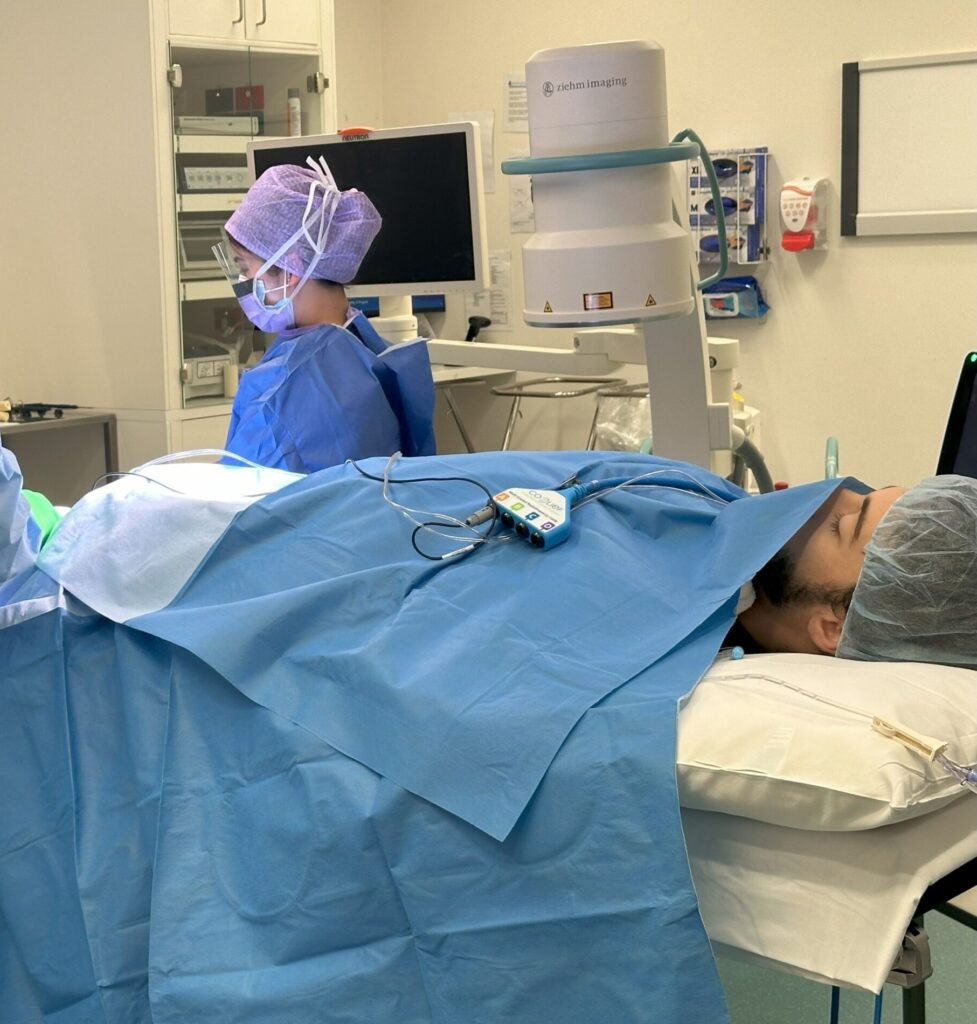
- You’ll lie comfortably while Dr Paterson uses live imaging (X-ray or ultrasound) to guide the placement of the RFA needles.
- Once positioned, a local anaesthetic is used before applying the radiofrequency current to the targeted nerves.
- The entire procedure generally takes under an hour, and you can go home the same day.
Most patients can return to normal activities within a few days, although some temporary soreness or swelling at the needle sites may occur.
How long does the pain relief last?
Pain relief following radiofrequency ablation is not permanent, but many people begin to notice improvement within 1 to 2 weeks after the procedure. For some, the benefits may last between 6 to 12 months, and in certain cases, even longer.
As the treated nerves gradually regenerate, pain may return over time. If this occurs, the procedure can often be safely repeated.
The degree of pain relief varies from person to person. Some individuals experience a noticeable improvement in mobility and a reduced need for pain medications, while others may find the results more modest. Dr Paterson will help you understand what to expect based on your specific condition and response to a prior nerve block.
Is RFA a cure for arthritis?
Radiofrequency ablation does not cure arthritis or reverse joint damage. Instead, it is used to help manage pain and improve quality of life in cases where surgery is not yet appropriate or preferred. For many patients, RFA is part of a broader treatment approach that may include:
- Ongoing physiotherapy
- Exercise and activity modification
- Weight management
- Joint preservation strategies
Dr Paterson will discuss whether RFA may be suitable for you as part of your individualised care plan.
Limitations and considerations of radiofrequency ablation
Like all medical procedures, radiofrequency ablation has some limitations and potential risks. These may include:
- Temporary side effects such as numbness, mild burning, or bruising around the treatment area
- Low risk of complications, including infection or bleeding (uncommon)
- Variable response — not all individuals experience the same level of pain relief
- Pain recurrence, as the treated nerves may regenerate over time
- Does not reverse joint damage, as RFA targets pain pathways but not the underlying arthritis
- May not be suitable if your knee pain is caused by other conditions unrelated to osteoarthritis
Dr Paterson will explain the potential risks, benefits, and expected outcomes based on your individual medical history and imaging results, helping you make an informed decision about your care.
When to discuss RFA with Dr Paterson
If you are living with persistent knee pain from arthritis that is affecting your ability to move comfortably, and you have not found adequate relief with other treatments, radiofrequency ablation may be an option worth considering. Dr Paterson can assess your condition and help determine if a diagnostic nerve block and RFA might be appropriate for your situation.