


Revision Knee Replacement
Addressing pain, instability, or failure after a previous knee replacement
REVISION KNEE REPLACEMENT
While most knee replacements provide many years of improved function and pain relief, some may develop problems over time that require further surgery. Revision knee replacement involves removing and replacing part or all of the original implant to restore knee function and relieve symptoms.
Dr Darren Paterson performs revision knee replacement for patients across the North Shore, Northern Beaches, Tamworth, and Central Coast NSW. Each procedure is carefully planned based on the cause of implant failure, the patient’s symptoms, and the condition of the surrounding bone and soft tissue.
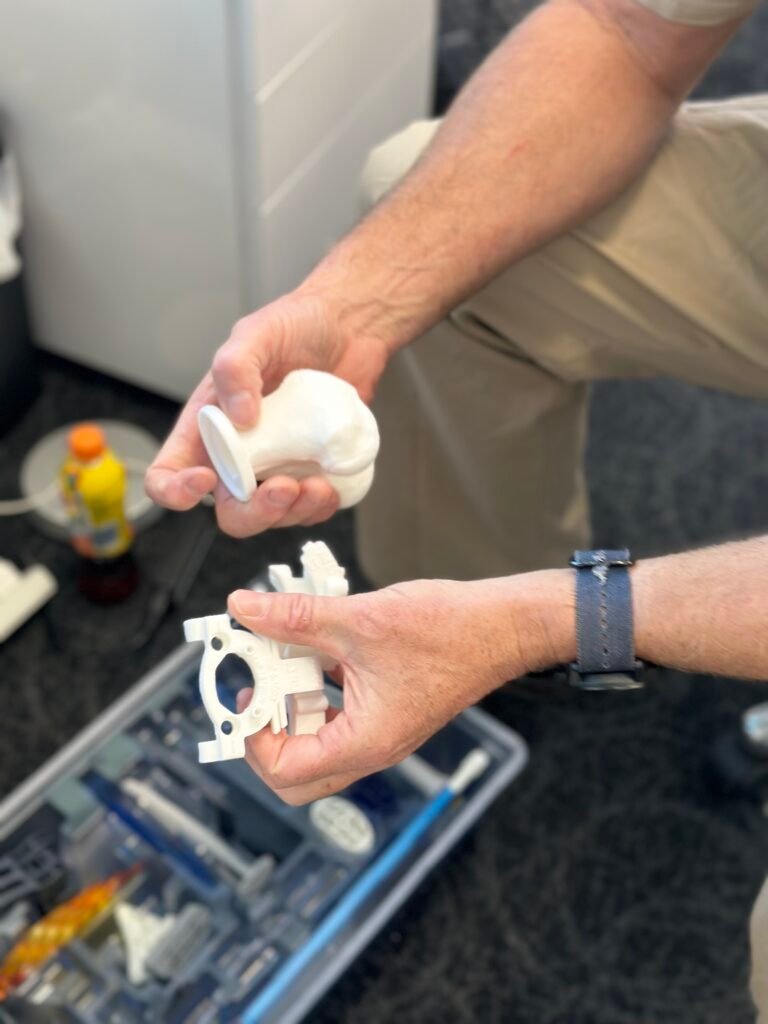
Why a knee replacement might require revision
A knee replacement may fail or become problematic for a number of reasons, including:
- Implant wear or loosening – Over time, the components may loosen from the bone or wear down.
- Infection – Infection within the joint may cause pain, swelling, and instability, sometimes requiring staged surgery.
- Instability – Ligament damage or malalignment can cause the knee to give way or feel unstable.
- Fracture around the implant – Trauma or weakened bone can lead to periprosthetic fractures.
- Stiffness – Excessive scar tissue or mechanical issues can limit movement.
- Ongoing pain – Persistent discomfort despite well-positioned implants may require investigation.
Assessment before revision surgery
Before recommending revision knee replacement, Dr Paterson will perform a comprehensive assessment that may include:
- A detailed review of your medical and surgical history
- Examination of your knee function, strength, and stability
- Imaging, such as X-rays, CT scans, or MRI
- Blood tests to rule out infection
- Joint aspiration (fluid sampling) in cases where infection is suspected
This evaluation helps determine the cause of the problem and guides the surgical plan.
The revision knee replacement procedure
The complexity of revision knee replacement depends on the extent of the damage and the condition of the surrounding bone and ligaments. In general, surgery involves:
- Removing the old implant – This must be done carefully to preserve as much healthy bone as possible.
- Treating underlying issues – Such as infection clearance or bone grafting where bone loss is present.
- Placing new components – Specialised revision implants are used, often with longer stems or additional stabilising parts to ensure secure fixation.
- Restoring alignment and balance – The goal is to optimise stability, motion, and weight distribution.
Revision surgery typically takes longer than the original replacement and may require more advanced implants and surgical techniques.
Recovery after revision knee replacement
Recovery varies depending on the complexity of the procedure and the reason for revision. In most cases:
- Hospital stay: 3–5 days
- Weight-bearing: Often allowed soon after surgery, guided by your surgeon and physiotherapist
- Physiotherapy: Essential for regaining mobility, strength, and confidence
- Return to activities: Light activities may resume within 6–8 weeks; full recovery may take 6–12 months
Dr Paterson will work closely with your rehabilitation team to create an individualised recovery plan.
Revision knee replacement surgery risks and considerations
As with all surgery, revision knee replacement carries potential risks, including:
- Infection
- Blood clots
- Nerve or blood vessel injury
- Implant loosening or mechanical failure over time
- Persistent stiffness or pain
Dr Paterson will discuss these risks with you before surgery and take steps to minimise them through meticulous surgical planning and postoperative care.
Is a revision knee replacement right for you?
Revision knee replacement is generally considered when there is a clear cause for the knee’s failure and when non-surgical management is no longer effective. During your consultation, Dr Paterson will explain the findings from your assessment, outline your surgical options, and provide a tailored treatment plan.