


ROBOTIC-ASSISTED TOTAL KNEE REPLACEMENT
Combining advanced technology with surgical expertise to treat knee arthritis
ROBOTIC-ASSISTED TOTAL KNEE REPLACEMENT
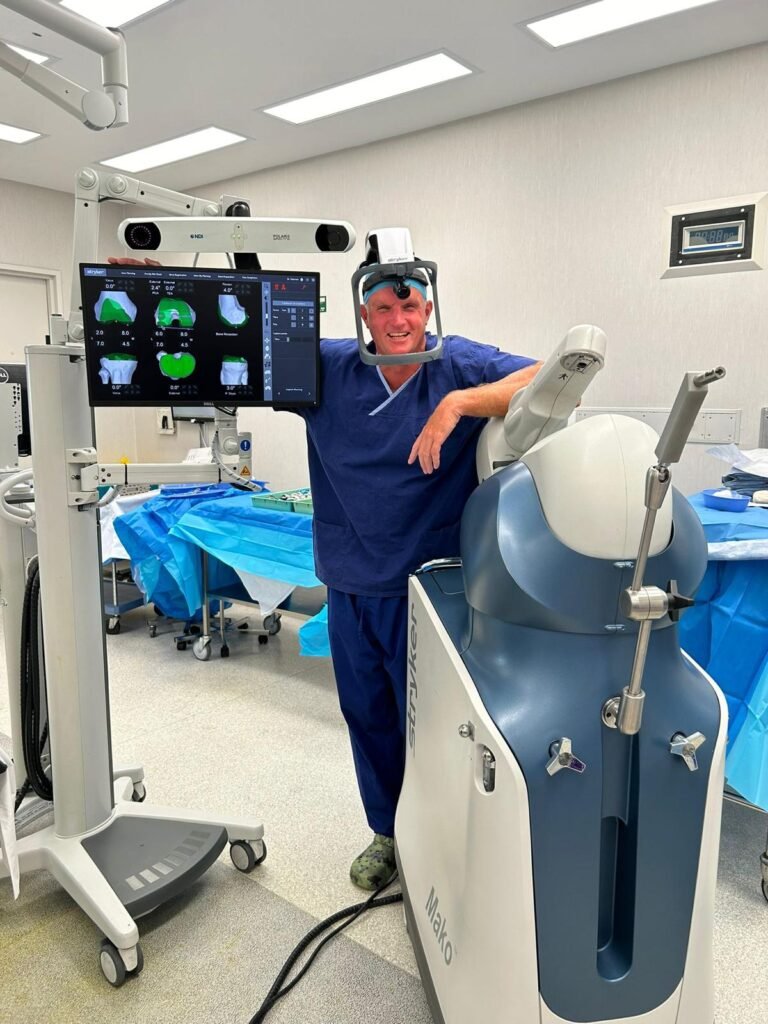
Total knee replacement is a proven treatment for advanced knee arthritis when non-surgical options are no longer effective. Robotic-assisted total knee replacement uses computer-guided technology to help the surgeon plan and position the implant with high precision, tailored to your unique knee anatomy.
Dr Darren Paterson offers robotic-assisted techniques for suitable patients across the North Shore, Northern Beaches, Tamworth, and Central Coast NSW. This approach does not replace the skill of the surgeon but acts as a tool to assist in achieving accurate alignment and balance of the knee joint.
When robotic-assisted knee replacement may be considered
Robotic-assisted total knee replacement may be recommended if you:
- Have advanced osteoarthritis or other degenerative knee conditions
- Experience persistent pain, stiffness, or instability despite non-surgical care
- Have joint damage confirmed by X-rays or scans
- Wish to optimise implant positioning and knee function post-surgery
How robotic-assisted total knee replacement works
- Preoperative planning – Detailed imaging of your knee is used to create a 3D model, allowing Dr Paterson to plan implant size, position, and alignment before surgery.
- Intraoperative guidance – During surgery, the robotic system provides real-time feedback to guide bone preparation and implant placement.
- Precision cuts – The robotic arm assists the surgeon in making bone cuts within a pre-defined safe zone, improving accuracy while preserving healthy tissue.
- Final adjustments – Soft tissue balance and knee movement are checked before the implants are secured.
Potential benefits of robotic-assisted knee replacement
While outcomes depend on many factors, potential advantages of robotic assistance include:
- Individualised planning – Implants are tailored to the patient’s anatomy
- Greater accuracy – Enhanced precision in bone cuts and component placement
- Optimised joint balance – Helps achieve smooth, stable knee movement
- Bone preservation – Only the necessary amount of bone is removed
It is important to note that robotic assistance is a surgical tool, and the experience and judgement of the surgeon remain the most important factors in your result.
Recovery after robotic-assisted knee replacement
Recovery follows a similar pathway to traditional knee replacement:
- Hospital stay: Usually 2–4 days
- Weight-bearing: Often allowed soon after surgery, guided by your surgeon and physiotherapist
- Physiotherapy: Begins in hospital and continues after discharge to restore mobility and strength
- Return to activities: Light daily activities often resume within 4–6 weeks; full recovery may take 3–6 months
Dr Paterson will create a personalised rehabilitation program suited to your surgery, fitness, and lifestyle needs.
Risks and considerations
As with all major surgery, risks include:
- Infection
- Blood clots
- Nerve or blood vessel injury
- Implant loosening over time
- Persistent stiffness or pain
Robotic assistance does not remove these risks but aims to enhance surgical precision and implant placement.
Is robotic-assisted total knee replacement right for you?
Not all patients require or are suited to robotic-assisted techniques. During your consultation, Dr Paterson will review your symptoms, imaging, and activity goals to determine whether this technology is appropriate for your knee replacement surgery.